Our top takeaways from Esri IMGIS 2025
The Esri Infrastructure Management & GIS Conference (IMGIS) brought together telecom, utility, and infrastructure professionals looking to build...

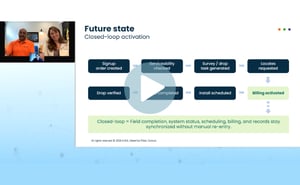
Faster installs depend on more than speed. Watch how connected orders, field work, and network records keeps Waterloo Fiber moving from request to activation.

Inspection findings should not sit in reports. Watch how Modesto Irrigation District moves field findings into repair assignments teams can act on.
3 min read
Adam Page : October 14, 2025
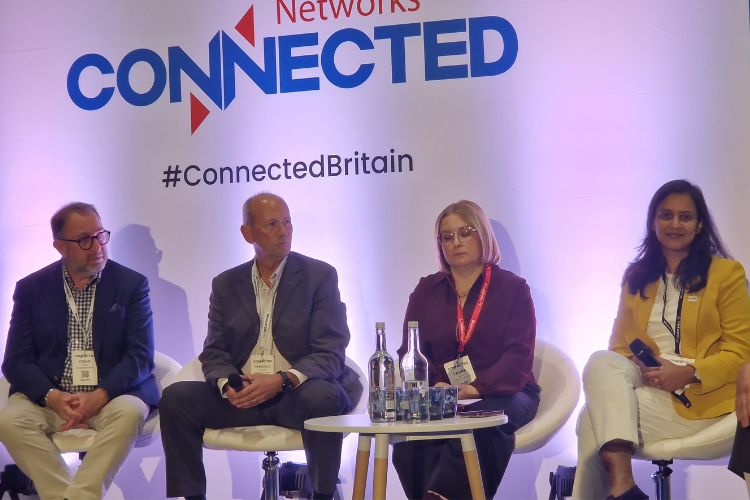
Over two full days last month, ExCeL London became the buzzing hub for Connected Britain 2025, where industry insiders, innovators, and policy voices converged to wrestle with the challenges and opportunities of UK connectivity. As someone who walked the floor and listened to various panels sessions, here are my key takeaways.
The opening day of Connected Britain was heavy on framing the big picture and kicked off with keynote speeches from leadership at the UK’s largest telco operators including BT and Virgin Media O2. There was concern raised about the level of costs (from regulation, compliance, energy bills, and business rates) putting the UK at a disadvantage compared to some of its European peers. This put the focus on a need for regulatory and fiscal stability for investment to be sustained. That resonated in many other sessions throughout the day which discussed the balance between ambition and the practical economics of network deployment.
Elsewhere in the “Connected Networks” and “Gigabit Britain” areas there were many recurring themes such as:
One of the frequent messages was that digital inclusion cannot be an afterthought. The “Connected Society” streams stressed that as we push hard on rolling out gigabit and 5G, we must not leave rural, underserved, or low-income communities behind. Policy levers, subsidies, targeted programs, and public–private collaboration all came under intense discussion.
Another highlight was a sharper focus on local authorities and place-based strategies. Councils and regional bodies are no longer just passive consumers of connectivity plans; many are becoming active partners, deploying dark fibre, investing in digital infrastructure themselves, or packaging localised incentives.
Indeed, one particularly intriguing session was the joint presentation by Boldyn Networks and Sunderland City Council, where they laid out their blueprint for bringing smart-city connectivity to Sunderland. They described how they’re combining fibre, 5G, IoT, and LoRaWAN (Long Range Wide Area Network) infrastructure across the city to create a network that supports everything from autonomous mobility trials to environmental sensing. What stood out was the emphasis on integration over standalone silos where the connectivity backbone allows different systems (transport, utilities, public safety, environment) to share data, scale over time, and adapt to evolving city needs.
On network deployment, panels tackled the real obstacles including wayleave delays, planning bureaucracy, rights-of-way constraints, procurement models, funding gaps, and the challenge of coordinating across utilities, highways, and telecom stakeholders.
One panel discussed the “barrier busting” theme further and how these challenges might be overcome. The consensus was that we need more standardisation, increased adoption of technology, and new models for risk-sharing (particularly for rural and marginal geographies).
Another notable strand was skills, workforce development, and the digital gap. It’s not enough to build fibre; we also need people who can deploy, maintain, drive adoption, and innovate services. Training, reskilling, and apprenticeship models all featured heavily across the agenda.
As the event wrapped up there was a palpable sense of urgency. We definitely have momentum, and now is the time to execute, remove friction, and deliver on the promise of a truly connected Britain.
Leaving the event with a sense of optimism and realism, I noted down a few reflections:
So as a final thought, we need continuous action and check-ins. Shows like Connected Britain can spark ideas and connections, but sustained follow-through is key. Partnerships, pilot projects, and initiatives need to be progressed, not just discussed.
The Esri Infrastructure Management & GIS Conference (IMGIS) brought together telecom, utility, and infrastructure professionals looking to build...
This series is centered around technologies and methods being developed for network densification projects as communities across the world prepare...
Network news roundup May's fiber and broadband news reflected a global industry moving fast. Many publicly funded programs produced their first real...