
A clearer view of copper
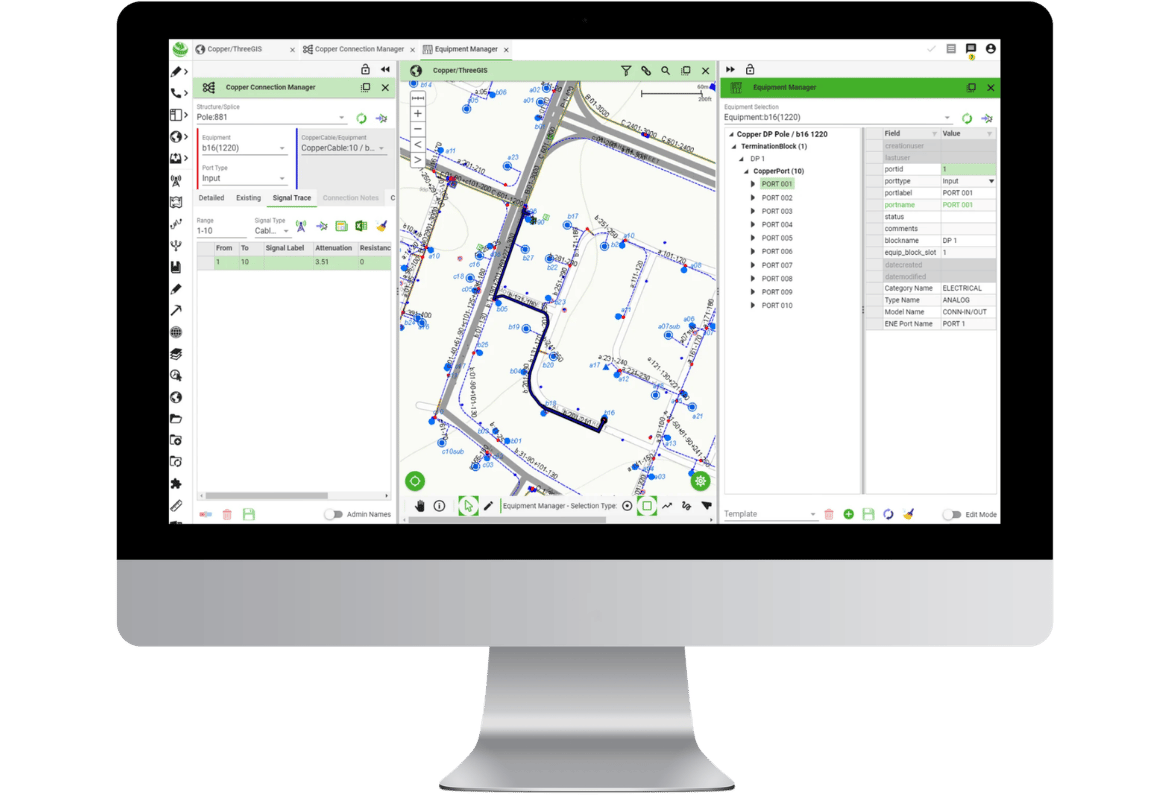
3-GIS | Web enables telecom organizations to manage copper and fiber network data in a single GIS-based system. Copper modeling capabilities give teams visibility into asset inventory, connectivity, querying, tracing, and legacy infrastructure as they operate existing networks, plan improvements, and build toward modernized infrastructure.
Unified network view
Bring legacy data forward
Copper infrastructure may be aging, but the information behind it still matters. 3-GIS | Web keeps copper data connected to the same network management environment as fiber, reducing reliance on separate systems, outdated records, and disconnected workflows.
Manage more than the map
Knowing where copper assets are is only part of the picture. In 3-GIS | Web, teams can manage the inventory, connections, signal paths, and asset details that keep copper infrastructure visible and usable alongside fiber.
Document copper assets
Maintain copper asset inventory and legacy network documentation in the same system teams use to manage fiber infrastructure.
Model network relationships
Represent physical and logical connections across copper cables, equipment, terminations, and fiber-to-copper network relationships.
Understand signal flow
Use copper tracing and connectivity tools to understand how network elements relate, where signals move, and how assets support service delivery.
Find network details
Search, query, and retrieve copper network information using configurable attributes, asset-specific details, and visual network context.
Built for copper complexity
3-GIS | Web gives teams practical tools to manage copper infrastructure with more clarity and control. From visual context to asset-specific details, users can work with copper data in ways that support daily network management.
Easy data management
Intuitive data creation and editing tools enable teams to add, update, and maintain copper network information without adding unnecessary complexity to daily work.
Visual cable context
Visual differentiation between cable types helps users understand what they are working with more easily, especially when copper and fiber assets exist in the same network view.
Detailed asset attribution
Asset-specific querying, configurable attributes, and ripple and throw attribution help teams find, update, and understand copper network information with more context.
Related products
Explore the 3-GIS ecosystem
3-GIS | Web’s copper capabilities connect to a broader software ecosystem for managing network data, workflows, and configuration. Explore related products that expand how teams use network information across the business.
3-GIS | Web
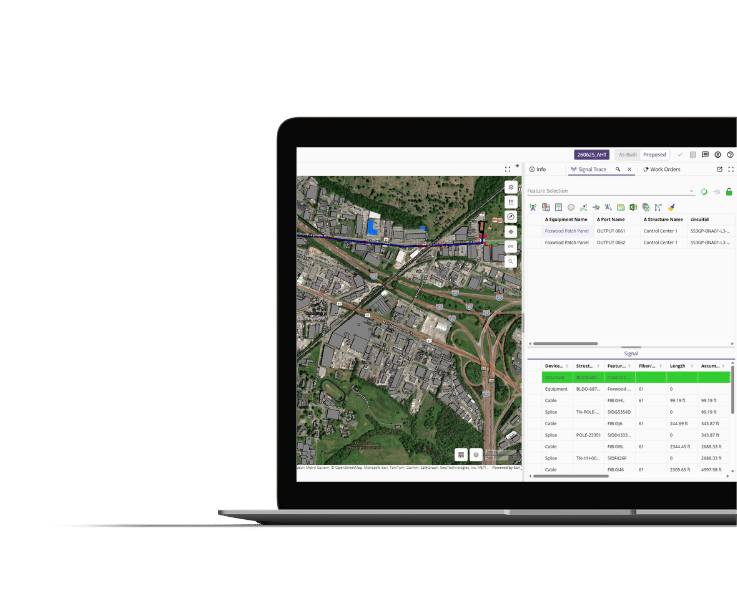
Manage telecom network assets, connectivity, and operational workflows from the browser-based GIS platform that supports copper and fiber network management.
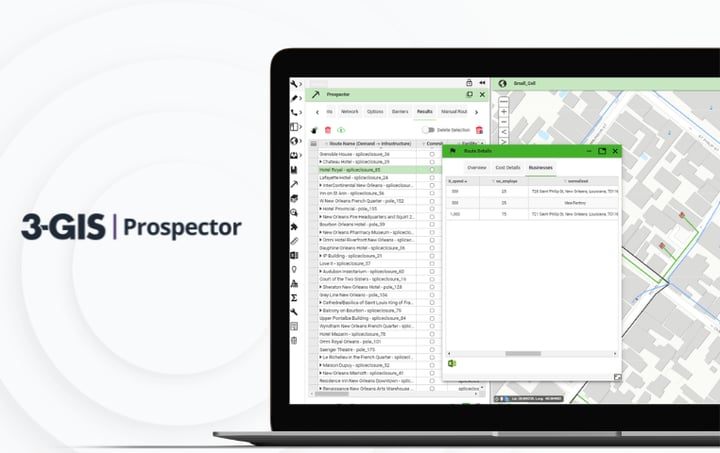
3-GIS | Prospector
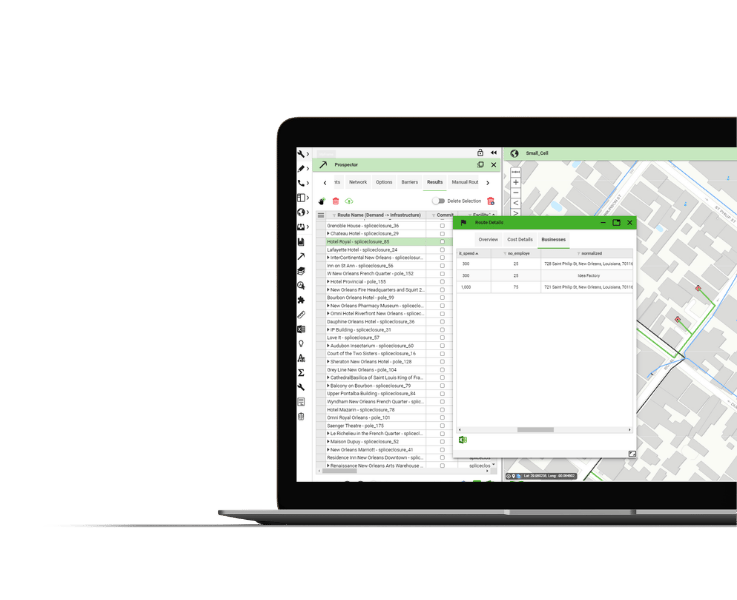
Evaluate network routes, costs, and opportunities to support smarter fiber planning and expansion.
3-GIS | Diagramming
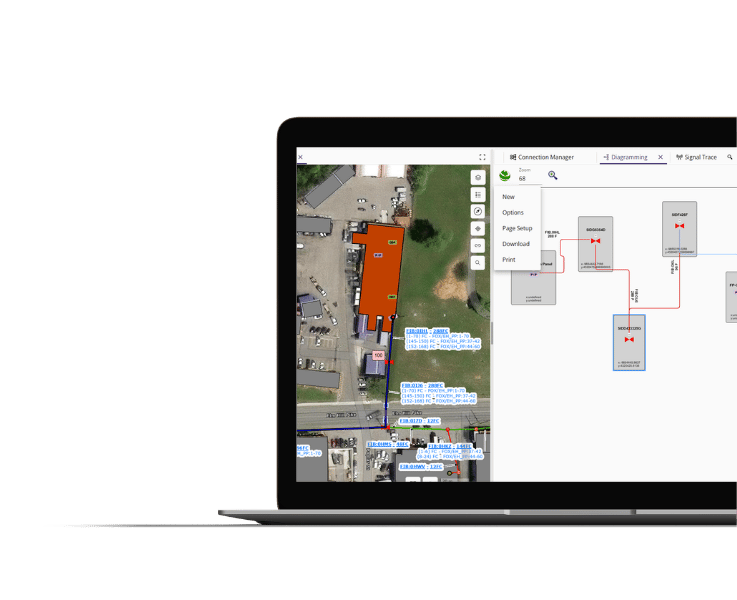
Turn network connectivity into configurable visual outputs that make relationships, paths, and downstream impacts easier to understand.
3-GIS | Web copper modeling FAQs
-
Does 3-GIS | Web support copper modeling?
Yes. 3-GIS | Web includes copper management capabilities that help telecom organizations document, model, and manage copper network data alongside fiber in a single GIS-based network management system.
-
Can copper and fiber be managed together in the same database?
Yes. 3-GIS | Web supports copper and fiber network data in the same database, helping teams manage both technologies as part of one connected network record rather than separate layers, systems, or disconnected documentation.
-
What information about the copper network can teams manage in 3-GIS | Web?
In 3-GIS | Web, teams can manage copper asset inventory, network documentation, connectivity relationships, cable details, configurable attributes, and other information needed to keep copper infrastructure visible and usable.
-
How does modeling copper support network modernization efforts?
Copper support helps organizations preserve access to legacy network data while transitioning to fiber. Instead of leaving copper records in disconnected systems or outdated documentation, teams can maintain visibility into existing infrastructure as network needs change.
Support the network you manage
Explore resources on maintaining existing infrastructure, improving network visibility, and using trusted GIS data to support planning and operations.