How utilities are getting more out of the Esri Utility Network
Editor’s note: Originally published by SSP Innovations under SSP Productivity. Updated by the 3-GIS Team with the current product name, 3-GIS |...

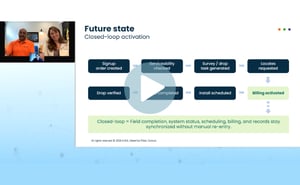
Faster installs depend on more than speed. Watch how connected orders, field work, and network records keeps Waterloo Fiber moving from request to activation.

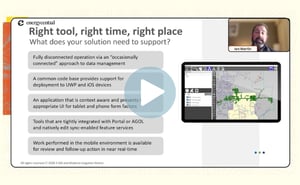
Inspection findings should not sit in reports. Watch how Modesto Irrigation District moves field findings into repair assignments teams can act on.
3 min read
3-GIS Team : Updated on January 23, 2026
Editor’s note: Originally published by SSP Innovations under SSP MIMS. Updated by the 3-GIS Team with the current product name, 3-GIS | MIMS, and other revisions.
Mobile technology continues to evolve, and in the utility industry, mobile solutions are now everywhere. Many utilities run multiple applications from different vendors, often without a cohesive strategy for managing them. Some are essential, others overlap, and a few may even duplicate functions. So how do you get control of your mobile environment and make sure it supports your goals? The answer is to develop an enterprise mobile strategy.
The first step is to inventory all the mobile applications and custom tools in use across your organization, along with their use cases. Get management support early, so people understand why the work matters. Catalog your data capture tools, inspection forms, and work management solutions. Look across engineering, operations, field services, and asset management for common requirements and duplicate sources of data.
This process highlights overlaps and helps identify candidates for consolidation. Expect some resistance — people often become attached to the tools they use. At this stage, though, the goal is simply to gather information to inform the strategy.
Once you understand the landscape, you can identify opportunities for consolidation or standardization. For example, not every piece of equipment needs its own inspection form. Transformers, load break junctions, and switchgear can often be consolidated into one.
The same holds true for maps. Instead of custom displays for each user, many can work from a standard base map. Reducing the number of forms and maps makes administration easier and helps field workers know which tools to use.
Field workers are critical to the success of a mobile strategy. Beyond understanding why data is collected, they should be part of prototyping and trial runs. Their feedback ensures that the process is realistic and efficient.
Ask questions like:
Complicated forms or unrealistic expectations lead to poor data and frustrated users. Keeping forms simple and intuitive is key.
As you consolidate and standardize, also evaluate why each form exists and how the data is used. Consider:
To maintain data integrity, limit freehand typing. Dropdown menus and standardized options create consistent, repeatable results.
Finally, design processes that are flexible enough to adapt. Field conditions rarely match the ideal, and requirements can change quickly due to new findings or corporate priorities. Your strategy should allow for adjustments without major disruption.
Any enterprise mobile strategy has to fit within your organization’s broader technology environment. That landscape typically includes:
Any mobile technology you adopt will likely need to interact with one or more of these systems. If you’ve completed the assessment from earlier steps, you should already understand what those interactions look like.
There are several categories of mobile technology available:
Rather than simply listing pros and cons, it’s best to evaluate these holistically. The goal isn’t to fit a specific technology into your organization but to find the one that best aligns with your infrastructure and business needs.
Here are some questions to guide the evaluation:
1. What is your budget or appetite for licensing?Implementing an enterprise mobile strategy is never simple. It’s unlikely that every use case can be rolled into a single platform. But with careful analysis of your business drivers, consolidation of overlapping tools, and thoughtful evaluation of available technologies, you can reduce complexity, improve efficiency, and give both office and field teams a strategy that works.
3-GIS | MIMS offers utilities a path to standardize mobile processes while still accommodating the flexibility required by field operations.
Ready to simplify your mobile tools? Contact us.
Editor’s note: Originally published by SSP Innovations under SSP Productivity. Updated by the 3-GIS Team with the current product name, 3-GIS |...
Editor’s note: Originally published in July 2023 by SSP Innovations under SSP SPANS. Updated in 2025 by the 3-GIS Team with the current product name,...

To be competitive in the telecommunications landscape today providers rely on workflow processes and systems that integrate information across the...