2 min read

Five lessons learned in the permitting process

Five lessons learned in the permitting process

We’re running the risk of stating the obvious here -- reliable internet access is essential. We’ve all had the opportunity to learn this first hand throughout the COVID-19 pandemic shelter-in-place orders. If you’re a telecom engineering firm, you’ve likely felt the urgency to deploy even more fiber even faster because of the pressure being applied to current networks around the world.

But deploying a fiber network is complex and protracted. From planning to design to permitting, it can take what feels like an eternity just to make it to the construction phase. 

Not to mention, the timeline is extending with the more elaborate infrastructure being introduced. How can you stay on track and continue to meet your fiber delivery deadlines in this demanding market? 

We think facilitating the permitting process is key, so we’ve put together five things we’ve learned during the permitting process that have helped our customers deliver on time without the headache.

1. Board meetings

Every city, municipality, or even sometimes an individual neighborhood has a governing authority making legislative decisions involving that specific area. Call it a city council, municipal board, or homeowners association - either way, you have to go through them for approval. Most of these committees only meet on a monthly basis, so we suggest spending time at the beginning of the project to research which approval authorities you will have to work with to get your project permitted and ready for construction. Find out when and where they meet to avoid any construction delays.

2. Differing permit requirements

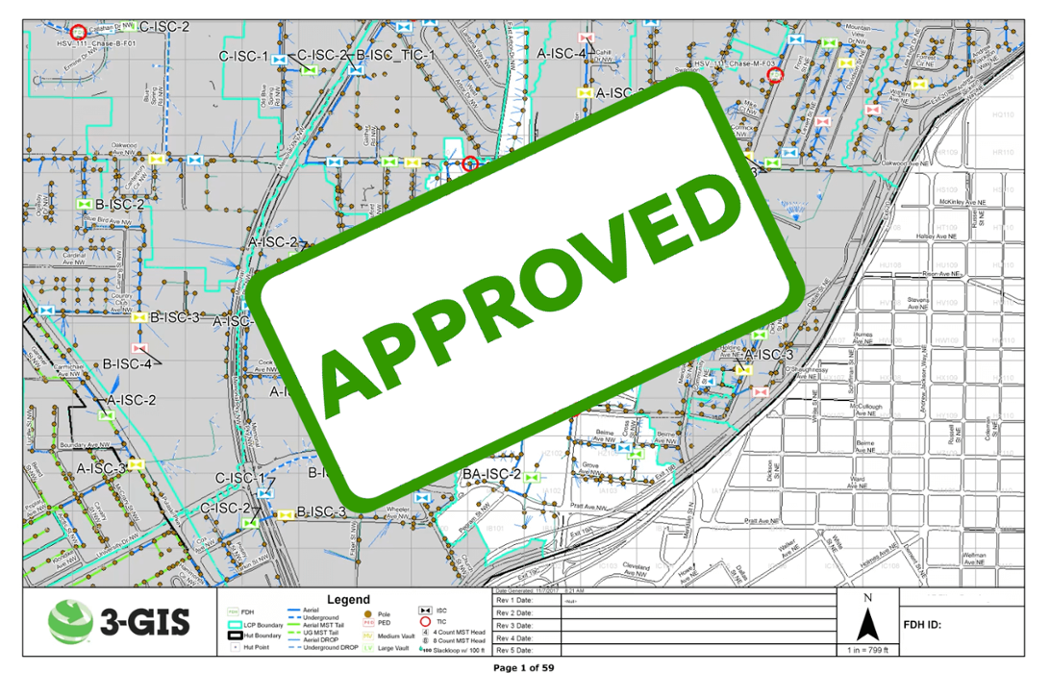
As different as the designs for each network are, as are the permits required to build them. Some permits seem straightforward and uncomplicated, but some have very specific requirements. A practical example of this is some permits will require scaled drawings and PE signatures, while others will not. Knowing the specific permitting requirements for each section of your project will alleviate stress and rushed efforts when the time comes to construct that phase.

3. Long lead permit approvals

As we just mentioned, some areas require a more extensive permitting process than others. A few specific examples of these are: railroad and water crossings, wetlands, and state and federally managed areas like national parks and scenic roadways. Because these areas have more complicated permitting requirements, we recommend taking a step beyond just knowing those details, and suggest designing and engineering these areas first so the longer permitting timeline does not hold up the rest of your project.

4. Formatting 

Not only will some areas have specific requirements, but those approving authorities we discussed earlier will also have certain conditions that must be met in order to issue a permit. One specification we’ve come across that has caused unnecessary and unexpected delays is the formatting of the permit application itself. Agencies like DOT especially have strict requirements. Use the authorizing agency’s borders and formatting to make sure you pass permitting. It may seem like a technicality, but make no mistake, having to reformat all your permit applications can be a time consuming process that can easily be avoided with proper advance planning.

5. Permitting fees

We’ve all heard the saying that nothing in life is free, and that goes for the network permitting process as well. Different authorities will require different fees depending on construction area and phase. Permitting fees range anywhere from the design review stage to the cost of a flagger during construction, so do yourself a favor and determine which fees you will most likely come across in your project so your budget doesn’t have to endure many surprises.

The easier the permitting process, the faster you can get fiber in the ground. Executing on these five practical lessons can make your permitting process much smoother and more efficient, allowing you to remain on budget and on schedule. And with that, we wish you happy permitting!


If you're ready to implement these permitting tips, but are not sure where exactly to begin, let our Engineering Services team help. They are eager to consult and assist to get your projects up and running in the right direction. Learn more about what our Engineering Service team can do for you.

Let technology power your CAF II project success

Let technology power your CAF II project success

If your organization wins a CAF II block, it needs to come up with a plan to build and manage the new network in a way that will maximize its return....

Read More
Let technology power your rural broadband project success

Let technology power your rural broadband project success

If your organization wins an RDOF block, you will need to come up with a plan to build and manage your new network in a way that will maximize its...

Read More
The impact of machine learning on fiber network engineering

The impact of machine learning on fiber network engineering

Fabion Kauker, 3-GIS Product Architect, presents the results of his research in a paper awarded at the 2018 Human Computer Interaction International...

Read More