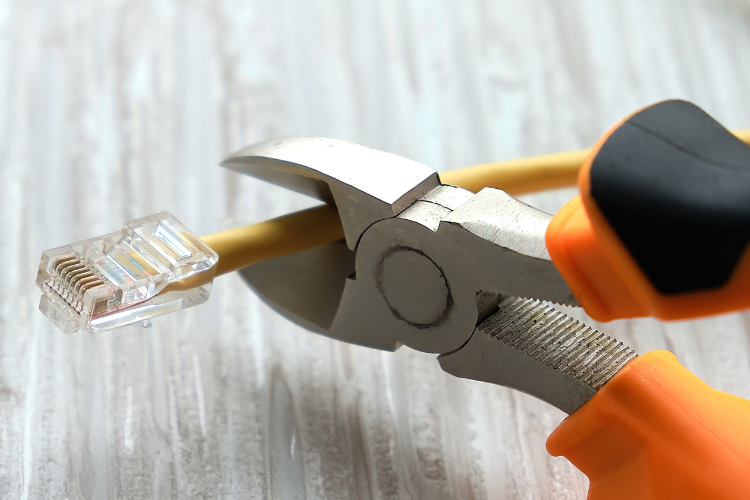
The true cost of network downtime
In recent blog posts, we explored fault resolution using 3-GIS tools (such as OTDR Trace and Single Point of Failure) and discussed common reasons...


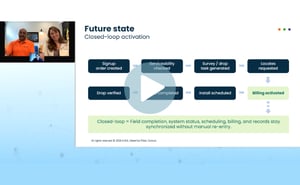
Faster installs depend on more than speed. Watch how connected orders, field work, and network records keeps Waterloo Fiber moving from request to activation.
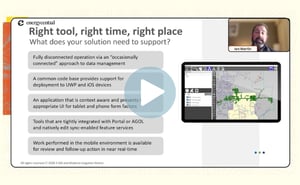
Inspection findings should not sit in reports. Watch how Modesto Irrigation District moves field findings into repair assignments teams can act on.
4 min read

Today’s broadband customers expect more than just a fast, reliable connection. They expect flawless service experiences.
For operators, that makes customer experience (CX) the ultimate differentiator. Price and speed still matter, but loyalty is increasingly won, or lost, based on how smoothly you manage your network, how quickly you respond to problems, and how confidently customers feel you’ve got them covered.
This is where GIS-enabled network management can give a significant competitive advantage. By giving operators real-time visibility, smarter analytics, and integrated workflows, spatially-informed tools are helping to minimise downtime, transform customer relationships, and reduce churn.1
Traditional network operations have long been built on fragmented systems, siloed teams, and reactive workflows. When a fault occurs, the process often looks like this:
Not only does this approach waste time and resources, but it also leaves the customer feeling like an afterthought. In a time when digital services are mission-critical for everything from remote work to healthcare, that’s unacceptable.
Geographic Information Systems (GIS) help operators visualise their networks in a geospatial context, managing every aspect of the physical network while modelling the logical network and connecting data, people, and processes.
With real-time visibility, crews can see exactly where assets are located, how they connect, and what is impacted during an outage. This clarity allows operators to isolate faults far more quickly, pinpointing issues in minutes rather than combing through spreadsheets or drawings. At the same time, integrated workflows support cross-team collaboration, from planning and design through to field maintenance, with everyone working from a single, accurate view of the network.
For customers, this translates into fewer disruptions, faster fixes, and a sense that their provider truly has control.

The link between network management and CX becomes clearest during an outage, with customers looking for a quick resolution and proactive updates.2
With GIS-enabled workflows, faults can be detected much earlier as network telemetry and monitoring systems feed into a centralised view, flagging anomalies before customers even notice an issue. When a disruption does occur, root cause analysis is significantly faster, allowing engineers to trace the problem to the exact fibre segment, pole, or splice point. Field crews are also better prepared, arriving on site with mobile access to accurate maps and asset data so they know exactly what tools and materials are required before work begins.
Winning loyalty isn’t only about fixing issues quickly; it’s about preventing them in the first place. Applying analytics moves operators from reactive firefighting to proactive care.
Examples of this include:
For customers, this proactive management often goes unseen, but it creates an impression of consistency and reliability. For operators, research has shown that proactively addressing network reliability in this way can lead to a 5% increase in customer retention.3
Ideally, customer experience should be the ultimate focus of every team across the organisation. In fact, in a study of telecom decision-makers, 54% cited improving customer experience as a top transformative initiative, with all areas of network operations playing a role in shaping how customers perceive service quality.4 This gap is further closed by linking network events directly to customer records, enabling operators to instantly see which households or businesses are affected by a fault.
This unified view also supports automated communication, ensuring customers receive real-time updates on outages, repair ETAs, and confirmation when service is restored. With deeper insight into customer priority, SLAs, and potential business impact, providers can deliver more personalised care and tailor responses accordingly.
Improving customer experience through smarter network management also makes good business sense. The measurable impact is felt across the organisation, from reduced churn as satisfied customers are far less likely to switch providers in competitive markets, to higher average revenue per user (ARPU) as loyalty increases openness to premium packages, add-on services, and upsell opportunities.5
At the same time, faster fault resolution improves operational efficiency by lowering truck rolls, reducing OPEX, and optimising workforce utilisation, with one study citing a 20-30% reduction in field-service personnel costs.6 Fewer outages and more effective communication also strengthen brand reputation, driving higher Net Promoter Scores (NPS) and positive word of mouth.
In short, investing in GIS-enabled network operations pays dividends across the organisation.
It’s become clear that customer experience can be a key differentiator for telcos with 85% of businesses now expected to compete primarily on the basis of CX rather than price or product.7 In an age of constant connectivity, outages and delays, and how they are dealt with, increasingly shape how customers perceive a brand.
By implementing GIS-enabled network management, operators can minimise downtime, accelerate repairs, and anticipate problems before they arise. More importantly, they can transform every customer interaction, from routine service to unexpected disruption, into an opportunity to build loyalty.
Citations:
1 Belda, Borja, Sebastian Cubela, Brendan Gaffey, Sebastián González, and Tomás Lajous. “The Network Is the Product: How AI Can Put Telco Customer Experience in Focus.” McKinsey & Company, February 23, 2024. https://www.mckinsey.com/industries/technology-media-and-telecommunications/our-insights/the-network-is-the-product-how-ai-can-put-telco-customer-experience-in-focus
2 Krueger, Lauren. “3 Telecom Customer Retention Strategies Fueled by Consistent Communications.” CSG, April 24, 2025. https://www.csgi.com/insights/3-telecom-customer-retention-strategies-fueled-by-consistent-communications/
3 Luck, Ian. “Customer Experience Management in Telecoms,2025 Guide.” CustomerGauge, December 5, 2024. https://customergauge.com/blog/telecom-customer-experience-management
4 Baschnonga, Adrian, and Sören Grabowski. “Are Leaders Ready for the Telco of Tomorrow?” EY, July 17, 2024. https://www.ey.com/en_gl/insights/telecommunications/are-leaders-ready-for-the-telco-of-tomorrow
5 GSMA. The Mobile Economy 2024. February 2024. https://www.gsma.com/solutions-and-impact/connectivity-for-good/mobile-economy/wp-content/uploads/2024/02/260224-The-Mobile-Economy-2024.pdf
6 McKinsey & Company. TechEnabled Transformation: The Trillion Dollar Opportunity for Industrials. September 2018. https://www.mckinsey.com/~/media/mckinsey/business%20functions/mckinsey%20digital/our%20insights/tech%20enabled%20transformation/tech-enabled-transformation-the-trillion-dollar-opportunity-for-industrials.pdf
7 Patov, Aslan. “Key Customer Experience (CX) Statistics You Need to Know in 2025.” August 17, 2024. https://www.renascence.io/journal/key-customer-experience-cx-statistics-you-need-to-know-in-2025
In recent blog posts, we explored fault resolution using 3-GIS tools (such as OTDR Trace and Single Point of Failure) and discussed common reasons...

Ever have to send the service interruption letter and have your PR team explain the situation to the news media? In November 2018, internet, cable tv...

Data, data, data. We are all about data. It is the foundation of today's telco world, from where to deploy next to how to serve our customers best....